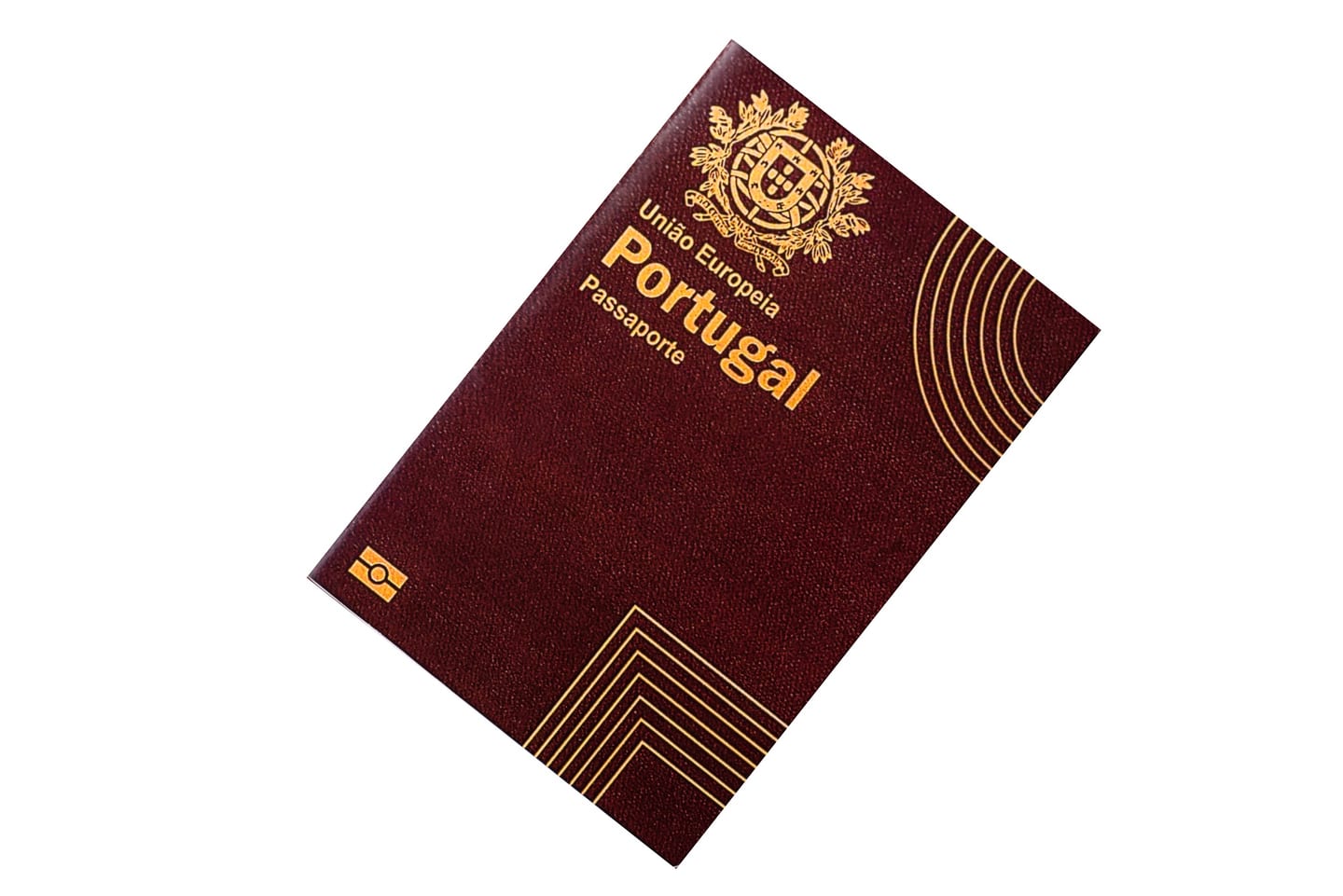
- No Portuguese is required for a visa, a residence permit or its renewals; the language enters the law at the permanent permit after five years ("basic knowledge", art. 80.º) and at nationality (A2 certificate plus, since 2026, a culture test)
- The State teaches it for free: PLA courses in public schools and IEFP centres certify A2 and B2 for residents aged 16 or over, and the A2 certificate counts for the permanent permit and nationality
- English gets you through Lisbon, Porto, Cascais and the Algarve coast; it does not get you through a health centre, a Finanças desk, a builder's quote or a court letter
- The paperwork is bilingual only in places: AIMA's site and contact centre (+351 217 115 000, weekdays 8:00–20:00) work in English; the letters that decide your file arrive in Portuguese
Yes, you can live in Portugal without speaking Portuguese — hundreds of thousands do, in the cities and on the coast, and the law does not ask for a word of it until years in. Whether you can live well without it depends on where you live, what you need from the administration and how long you intend to stay. This is an honest account of both sides, from an office whose clients bring us, every week, the letters they could not read.
What the law requires, and when
| Stage | Portuguese required? | Source |
|---|---|---|
| Visa (D7, D8, D2, D1, D4, family, CPLP) | No | Consular document lists (MNE) |
| Temporary residence permit and its renewals | No | Lei n.º 23/2007, arts 77.º–78.º |
| Permanent residence permit, after five years | “Basic knowledge of Portuguese” — the A2 certificate is accepted | Lei n.º 23/2007, art. 80.º; AIMA |
| EU long-term resident status | A2 certificate | AIMA (PLA page) |
| Portuguese nationality | Sufficient knowledge of the language (A2 certificate or recognised course) and, since 19 May 2026, a test on Portuguese culture and institutions | Lei Orgânica n.º 1/2026, art. 6.º |
So a retiree on a D7 or a remote worker on a D8 can renew for a decade with no exam. The two moments that require a certificate are the ones most people eventually want: the permanent card, and the passport.
Where English works
In our experience English is a working language in Lisbon and its western suburbs, Porto’s centre, the Algarve coast, Madeira, the universities and hospitals of the big cities, the tech and tourism sectors, and with the professionals — lawyers, accountants, doctors, estate agents, bankers — who serve foreign clients. Younger Portuguese overwhelmingly speak it. AIMA’s website and contact centre are bilingual; the tax authority’s online portal has an English layer for the most-used services; the SNS 24 line (808 24 24 24) is the entry point to the health service.
Where it does not
- The health centre. Registration, the family doctor, the nurse and the pharmacy counter work in Portuguese; the SNS is universal, not bilingual. In Lisbon and the Algarve, private clinics fill the gap in English — at a price.
- Finanças, Social Security, the registries. The desks, the letters and the portals’ deeper pages are in Portuguese. A wrong reply to a Finanças notice is a fine, whatever language you did not read it in.
- Trades and landlords. Builders’ quotes, rental contracts, condominium meetings and the câmara’s notices are in Portuguese; a translation app does not negotiate.
- The interior and the small towns. Outside the coast and the two metropolitan areas, daily life runs in Portuguese at every counter.
- Courts and police. Any legal act — a summons, a complaint, a contract dispute — is in Portuguese, with a sworn translator when you are a party.
The practical rule. Live without Portuguese in the first year if you must, but not without a Portuguese speaker on call: an accountant for Finanças, a lawyer for contracts, a friend or a service like ours for the letters. Every expensive mistake we have unpicked for clients — a missed tax deadline, a fine paid twice, a lease clause nobody read — started with a document in a language they had decided to ignore.
Learning it costs nothing
The State runs PLA courses — Português Língua de Acolhimento — in public schools through DGEstE, in IEFP training centres and in Qualifica centres, under Portaria n.º 183/2020. They are for residents aged 16 or over whose mother tongue is not Portuguese, holding a residence title, a pending residence or renewal application, an asylum or temporary-protection request, or a Social Security number. They certify A1+A2 and B1+B2, and AIMA states that “certification at level A2 or above proves knowledge of Portuguese for the permanent residence permit, long-term resident status and Portuguese nationality”. The alternative is the CAPLE’s CIPLE exam at the University of Lisbon (A2, 95 €, sittings in May, July and November) — see our guide to Portuguese language certification levels for all six levels and their fees, and ways to practise Portuguese for how to get there.
Three profiles
The retiree on the Algarve coast. Can live in English for years; needs Portuguese for the SNS registration, the health centre and the câmara; should aim at the A2 course in the first two years, because the permanent permit at year five and nationality later both ask for it, and exams get harder with age.
The remote worker in Lisbon. Works, rents and socialises in English; meets Portuguese at Finanças (the annual IRS return, the activity opening if freelancing) and at the AIMA renewal. An accountant covers the first; the language covers the rest.
The family in a mid-size town. Children learn it in months at school; parents without it are shut out of the school meetings, the paediatrician and the neighbours. Here the PLA course is not optional in practice.
Do I need Portuguese to get a residence permit?
No. Neither the visa nor the temporary permit nor its renewals require the language. The permanent permit after five years requires basic knowledge (A2), and nationality requires A2 plus the 2026 culture test.
Can I deal with AIMA in English?
AIMA's website and contact centre (+351 217 115 000, weekdays 8:00–20:00) are bilingual. Decisions, notifications and the renewal portal's forms are in Portuguese.
Are Portuguese courses free?
The public PLA courses are free for residents aged 16 or over with a residence title, a pending application or a Social Security number; they certify A2 and B2.
Is Portuguese hard for English speakers?
Reading comes fast — much vocabulary is shared through Latin; understanding spoken European Portuguese is the slow part. The A2 level required for papers is reachable within a year of steady lessons.
Which cities are easiest without the language?
Lisbon and Cascais, Porto, the Algarve coast and Funchal — the places with the largest foreign communities and English-speaking services. The interior is the opposite.
Sources and official references
- Lei n.º 23/2007, art. 80.º — permanent residence permit: basic knowledge of Portuguese — checked 19.9.2026
- Lei Orgânica n.º 1/2026 — Nationality Act, art. 6.º: knowledge of Portuguese and the culture test among the naturalisation conditions — checked 19.9.2026
- AIMA — Cursos de Português Língua de Acolhimento (PLA): free public courses, eligibility, A2 accepted for permanent residence, long-term residence and nationality — checked 19.9.2026
- CAPLE (Universidade de Lisboa) — CIPLE exam: level A2, 95 €, sittings May/July/November — checked 19.9.2026
- AIMA — FAQs and contacts: contact centre (+351) 217 115 000, Monday to Friday 8:00–20:00; bilingual site — checked 19.9.2026
- SNS 24 — the health service's line, 808 24 24 24 — checked 19.9.2026